
metric tons CO₂e / NT$ million in revenue
Environmental, Health and Safety (EHS) Policy
Establish and Maintain EHS Management Systems
- Implement the environmental management system and integrate it into the overall organizational management system to continuously improve environmental performance.
- Implement preventive management to ensure a safe working environment and safe operations, providing reassurance to employees and customers.
Comply with International and National Regulations and Requirements
- Comply with environmental laws and international conventions, and strive to become a sustainable green enterprise.
- Uphold voluntary commitments related to environmental protection, safety, health, and energy.
Promote Green Environmental Protection and EHS Activities with Full Participation to Eliminate Hazards, Reduce Risks, and Protect the Environment
- Promote environmental ethics education to raise environmental awareness. Through employee training and ISO 14001 implementation, ensure that personnel at all levels understand and fulfill their environmental protection responsibilities.
- Provide education and training for operators and site contractors in accordance with safety and health management plans to ensure full understanding of safety and health policies and management systems.
Regularly Review Activity Objectives for Continuous Improvement
- Regularly review, audit, evaluate, and improve corporate practices.
- Prevent hazards and ensure workplace safety.
Communicate with Workers and Related Parties to Reach Consensus
- Strengthen source reduction and pollution prevention to achieve the goals of green design, production, and operations.
- Reduce air and water pollution, as well as waste generation.
Biodiversity
Policy and Commitment
In 2025, Sercomm revised its Sustainable Development Best Practice Principles to include provisions aimed at reducing the impacts of its operations on biodiversity. The Company is gradually strengthening practices related to the conservation of marine and terrestrial ecosystems, the sustainable use of resources, and the fair and equitable sharing of benefits arising from the use of genetic resources.
Management and Implementation
Sercomm's major operating activities do not involve highly polluting or ecologically sensitive processes, and their direct impacts on biodiversity and ecosystems are relatively limited. The Company has conducted a preliminary review of the environmental characteristics surrounding its operating sites and potential ecologically sensitive areas. It also reduces indirect impacts on the natural environment through GHG emissions reduction, improved energy efficiency, renewable energy use, waste reduction and recycling, resource efficiency, and green product design.
Future Direction
Sercomm will continue to monitor international biodiversity developments, gradually strengthen the identification and assessment of nature-related risks and opportunities, and evaluate the adoption of the Taskforce on Nature-related Financial Disclosures (TNFD) framework and related disclosure requirements to enhance its management capabilities and transparency regarding nature-related issues.
Green Innovation and R&D
Sercomm integrates green design into its product development process based on the principles of Reduce, Reuse, Recycle, and Usage. These efforts encompass energy efficiency, material reduction, recycled materials, design for disassembly and recycling, and control of environmentally hazardous substances to reduce environmental impacts throughout the product life cycle. Sercomm also continues to invest in networking technologies and product development, integrating green design, innovation tools, and patent deployment to strengthen the low-carbon competitiveness of its products.
2025 Highlights
Product Energy Efficiency
All router products achieved power conversion efficiency above 80%, and more than 80% exceeded 85%. Revenue from eligible products with energy efficiency certifications accounted for 82.90% of total revenue.
Recycling and Regulatory Compliance
Products continued to comply with WEEE, RoHS, and REACH requirements. By the end of 2025, 91 products had undergone third-party WEEE-3R disassembly testing, including five assessed in 2025.
Innovation and R&D
R&D expenditure reached approximately NT$3.33 billion, representing 6.17% of revenue. The total number of patents granted exceeded 283.
Environmental Management Indicators
Swipe horizontally to view the full table
| Topic | Management Indicator | 2025 Results | Short-term Target 2025–2029 |
Mid-to-Long-Term Target 2030 |
|---|---|---|---|---|
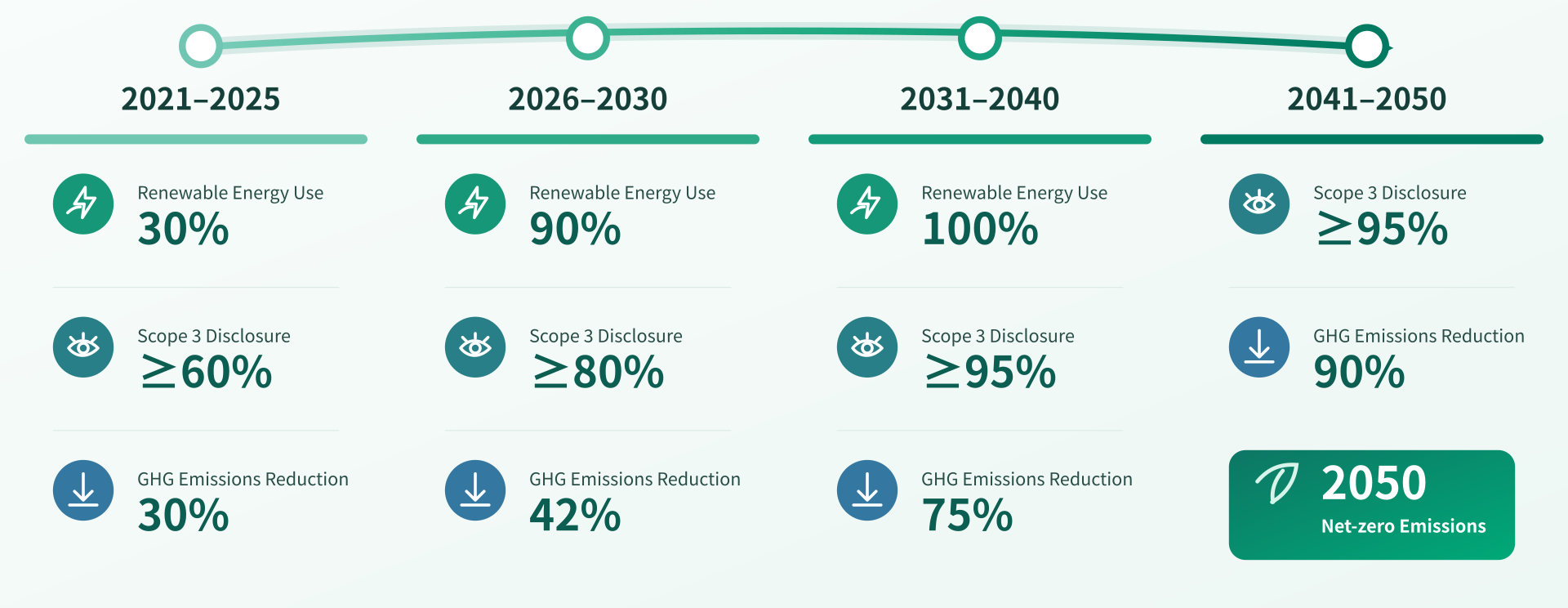
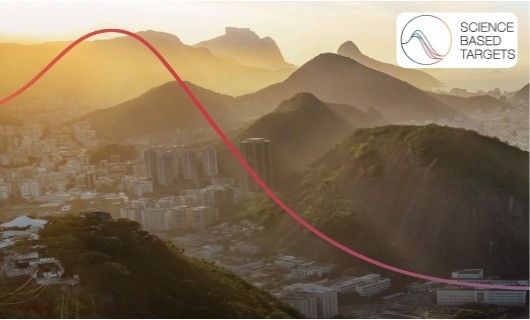
| Greenhouse Gas Management | Scope 1 and Scope 2 emissions (market-based) | 30.73% reduction compared to 2023 | Gradually reduce by 8% annually | 42% reduction from the base year |
| Scope 3 emissions | 17.60% reduction compared to 2023 | Gradually reduce by 4% annually | 25% reduction from the base year | |
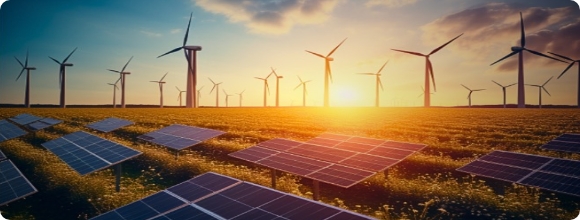
| Energy Management | Renewable energy percentage | 35.91% | Gradually increase by 15% annually | Reach 90% |
| Waste Management | Waste intensity metric tons / NT$ million in revenue |
0.0670 | ≤0.1010 | ≤0.035 |
| Water Resource Management | Water intensity megaliters / NT$ million in revenue |
0.0042 | ≤0.0054 | ≤0.0028 |
Environmental Management Certifications and Verification
Sercomm has obtained the following environmental management certifications and verification:
GHG Inventory and Assurance Status for the Most Recent Two Years
Since 2014, Sercomm has calculated GHG emissions by setting organizational boundaries based on the operational control approach and by referencing ISO 14064-1 and The Greenhouse Gas Protocol.
The inventory covers Taiwan, Mainland China, and the Philippines. Emissions from Taipei Headquarters have been included since 2023.
GHG Inventory Information
Emissions unit: metric tons CO2e; intensity unit: metric tons CO2e / NT$ million in revenue
Swipe horizontally to view the full table
| Item | 2024 | 2025 |
|---|---|---|
| Scope 1 (Direct emissions) | 632.24 | 1,593.25 |
| Scope 2 (Indirect emissions) – Location-based | 22,954.26 | 28,818.41 |
| Scope 2 (Indirect emissions) – Market-based | 20,884.61 | 17,669.46 |
| Scope 1 and Scope 2 – Location-based | 23,586.50 | 30,411.66 |
| Scope 1 and Scope 2 – Market-based | 21,516.85 | 19,262.71 |
| Scope 3 | 3,967,987.09 | 6,138,271.91 |
| Revenue (NT$ million) | 56,789 | 53,999 |
| Emissions Intensity – Market-based | 0.38 | 0.36 |
- Global Warming Potential (GWP) values from the IPCC Sixth Assessment Report (AR6) were adopted.
- Emissions intensity = market-based Scope 1 and Scope 2 emissions (metric tons CO2e) / total revenue (NT$ million).
GHG Assurance Information
Water Withdrawal, Discharge and Consumption over the Past Four Years
Unit: megaliters (ML)
Swipe horizontally to view the full table
| Category | 2022 | 2023 | 2024 | 2025 |
|---|---|---|---|---|
| Water Withdrawal | 240.85 | 214.21 | 184.63 | 229.39 |
| Water Discharge | 197.53 | 176.71 | 151.92 | 188.68 |
| Water Consumption | 43.32 | 37.50 | 32.71 | 40.71 |
| Water Intensity withdrawal / NT$ million in revenue |
0.0037 | 0.0034 | 0.0033 | 0.0042 |
- 1 megaliter = 1,000 kiloliters.
- For water, 1 metric ton = 1,000 liters.
- 1 cubic meter (m³) = 1,000 liters; therefore, 1 megaliter = 1,000 cubic meters (1,000 m³).
- For Taiwan sites, water discharge is estimated at 90% of water withdrawal with reference to the Guangyuan Technology Park. For sites in Mainland China and the Philippines, water discharge is estimated at 80% of water withdrawal in accordance with their environmental impact assessment reports. Following this methodological adjustment, the 2022–2024 data have been retrospectively restated to improve consistency and comparability across reporting years.
- Water consumption = water withdrawal – water discharge.
- Water intensity = total water withdrawal (megaliters) / revenue (NT$ million).
Waste Generated and Waste Intensity over the Past Four Years
Weight unit: metric tons; intensity unit: metric tons / NT$ million in revenue
Swipe horizontally to view the full table
| Category | 2022 | 2023 | 2024 | 2025 |
|---|---|---|---|---|
| Total Hazardous Waste Weight | 207.49 | 172.48 | 144.79 | 149.41 |
| Total Non-Hazardous Waste Weight | 4,455.51 | 2,830.16 | 2,312.79 | 3,470.80 |
| Total Waste Weight | 4,663.00 | 3,002.64 | 2,457.58 | 3,620.20 |
| Hazardous Waste Intensity | 0.0032 | 0.0028 | 0.0025 | 0.0028 |
| Non-Hazardous Waste Intensity | 0.0690 | 0.0452 | 0.0407 | 0.0643 |
| Total Waste Intensity | 0.0722 | 0.0480 | 0.0433 | 0.0670 |
- The scope of statistics covers the Chunan, Suzhou, and Philippines manufacturing centers.
- Intensity = total weight of the respective category (metric tons) / revenue (NT$ million).
- The 2022–2024 data in this table have been updated using the restated figures disclosed in the 2025 Sustainability Report.
2025 Environmental Action Highlights
Estimated Annual Electricity Savings
Green Actions Completed
Maximum Container Loading Efficiency
PCR Materials Used